
ON VIEW JULY 18-AUG 29, 2026
Dimensions of the Interior
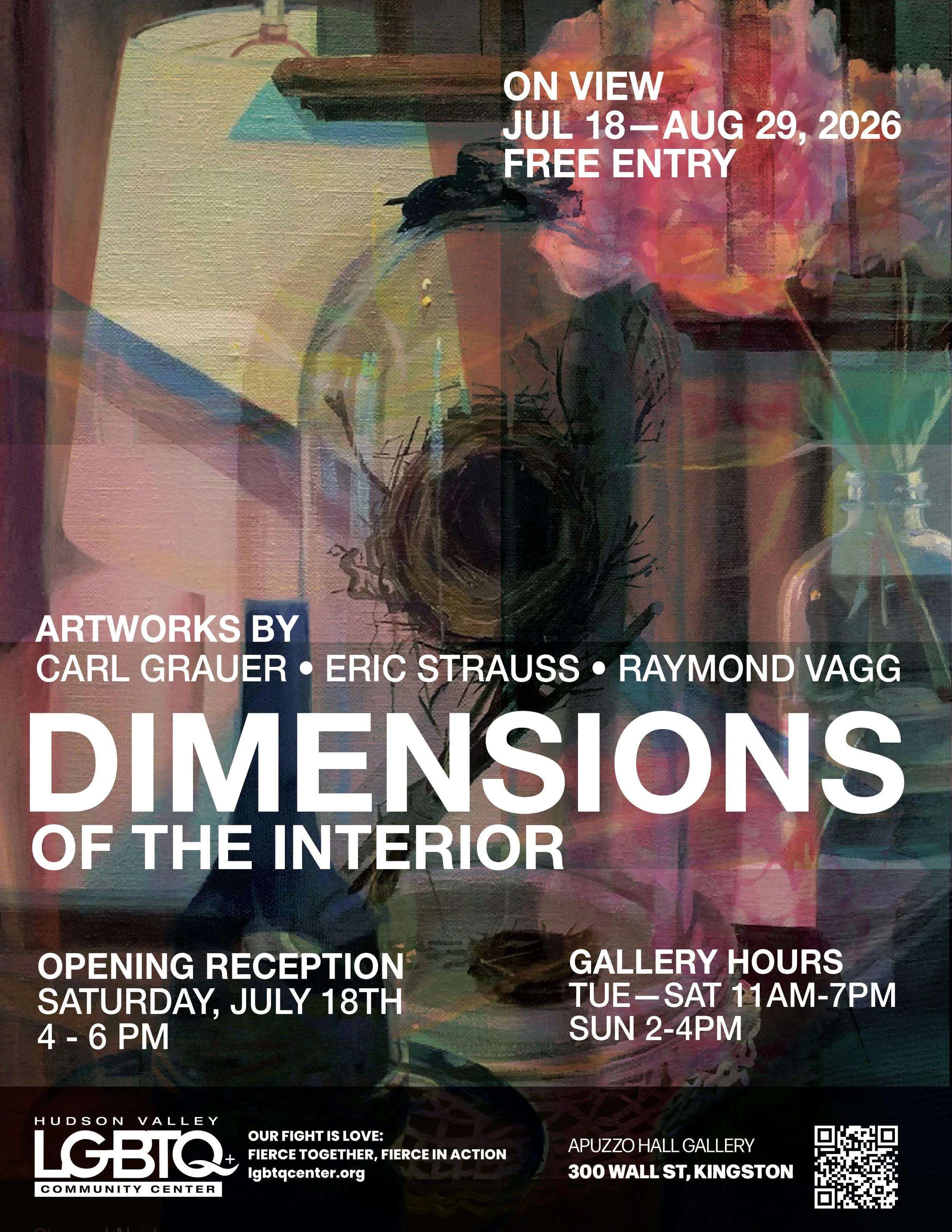
DIMENSIONS OF THE INTERIORAbout the Exhibition
An interior can be understood in several ways: as a quiet retreat, a family home or a space where life's most intimate moments unfold, a stage or a container. It can also refer to the inner self: the heart, the gut and the mind, where other forms of intimacy take shape. Within this interior world, quiet reflection and emotional turmoil coexist as persons process conflicts and confront questions of identity, self-expression, attraction and sexuality. In this exhibit, interior spaces serve to examine the complexities of family relationships, mortality, changing social norms and questions of gender, age and self. Through the power of our shared built environment, viewers are transported back in time to familiar spaces that are meant to evoke history, memory and feelings.
There is a reason this work belongs here. A community center is its own kind of interior. Sociologists call it a third place, the ground that is neither home nor work where people gather simply to be among each other. For queer people that ground has never been a given. The bars, bookstores, ballrooms and centers we made for ourselves were built room by room, often against the odds, because we needed somewhere to be fully "us" and to find one another. To gather here is not incidental to the show. It is the point.
Eric Strauss builds the literal architecture of memory. Drawing on a background in architectural design and environmental psychology, his paintings of stairwells, hallways and old building facades invite us into rooms that already feel lived in. These are not neutral spaces. They hold the weight of the people who passed through them and ask us to imagine the lives that unfolded behind their doors.
Carl Grauer ritualizes the quiet, sacred moments we usually let pass unmarked. In this series the interior becomes a space of meditation, where light moves across a window, incense burns, a candle is lit and then, without warning, gutters out into rising smoke. Grauer paints with slowness and attention, drawn to how time and space mean something different to each of us. These rooms carry the traces of the people who live in them, the marks that age, gender and family leave behind, and in holding them so gently the work keeps quiet company with mortality.
Raymond Vagg works in pure abstraction and refuses to hand over a fixed meaning. He paints for himself first and leaves the rest open, trusting each person to meet the work through the prism of their own life. His queerness lives in the hand that made the work, not in any message pinned to the canvas, and standing in front of a Vagg painting becomes its own interior act: a private conversation between the work and whatever you bring to it.
These are three gay male artists, and this is their work held inside a room that queer people made. That pairing matters, and it matters now more than ever. Placemaking is the quiet, stubborn practice of claiming space by saying we are here, we have always been here and we intend to stay. To hang these interior worlds on these walls is to insist that the inner life of queer people, in all its tenderness and complication, belongs in public and in community. The rooms make us, and we keep making the rooms. Step inside.
On view July 18 through August 29, 2026
Opening reception: Saturday, July 18, 4 to 6 PM
Closing reception: Saturday, August 29, 4 to 6 PM
Apuzzo Hall Gallery, Hudson Valley LGBTQ+ Community Center, 300 Wall St, Kingston
Free and open to all
Gallery hours: Tuesday through Saturday 11 AM to 7 PM, Sunday 2 to 4 PM
Meet The Artists
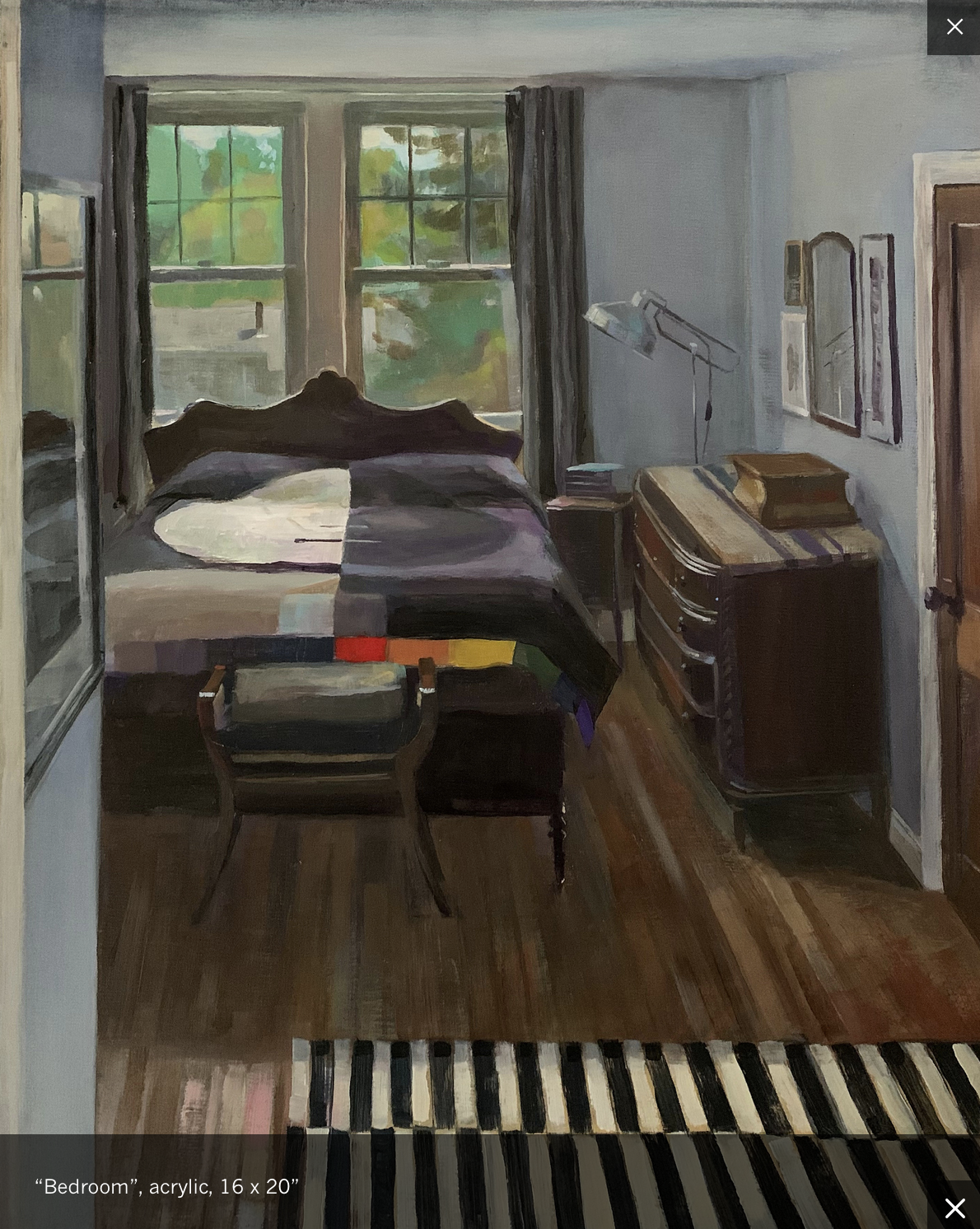
Carl Grauer grew up in Wilson, Kansas, a town of 800 people in the absolute middle of the state. He studied human biology and earned an MFA in medical illustration before finding his way to Brooklyn, where he worked in advertising and co-owned a small business selling antiques and fine art, all while wishing for the courage to make art more seriously. The sudden death of his brother in 2012 led him to commit fully to that pursuit. Now based in Poughkeepsie, he works in oil from observation, intuition and surrealism, and shows locally, nationally and internationally, including with the Carrie Haddad Gallery in Hudson and the Royal Society of Portrait Painters in London. With over ten years in portraiture, he approaches each sitting as a focus on intuitive strokes that connect to the spirit of the sitter, a process he sees as a kind of healing.
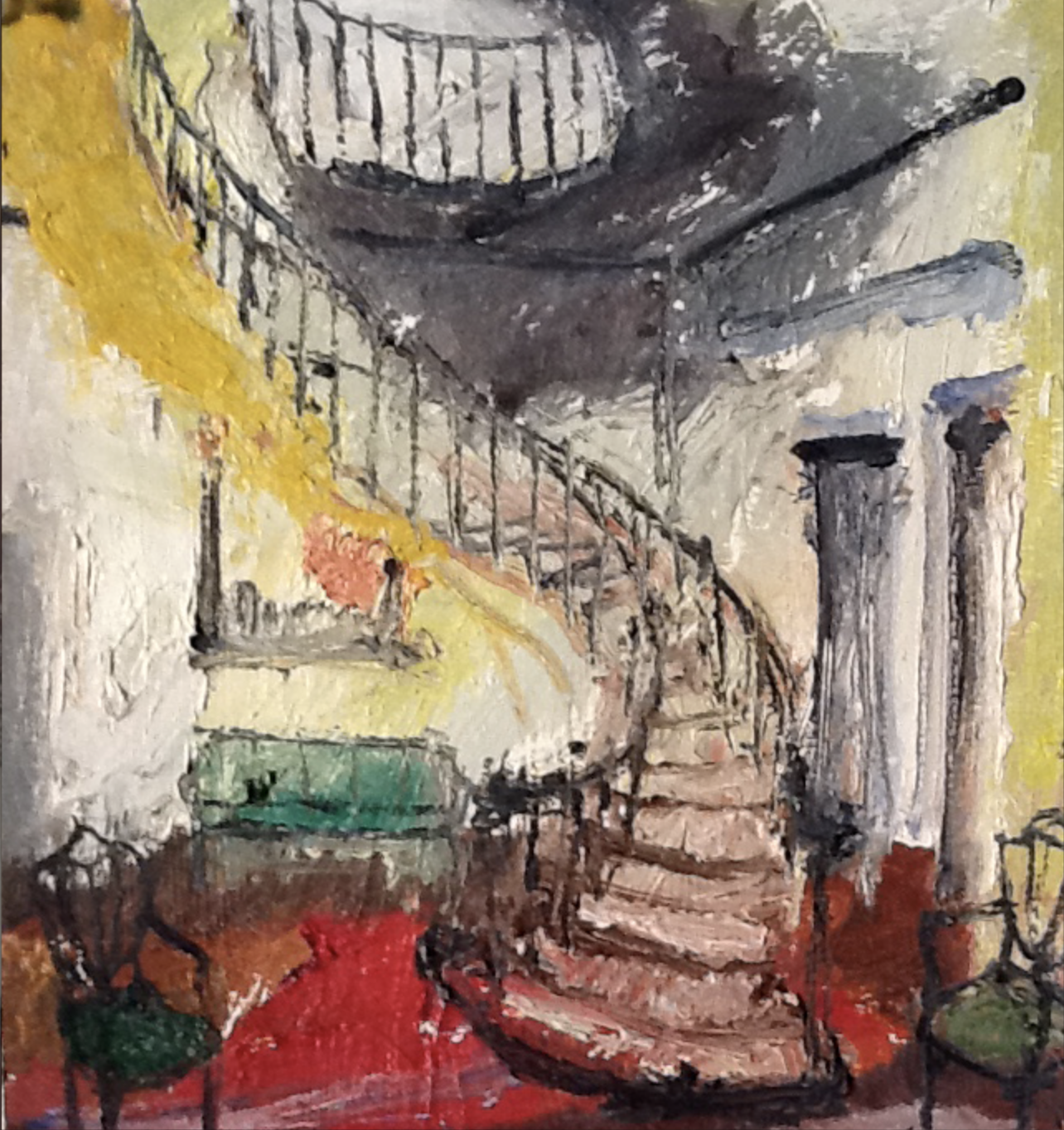
Art has been the central focus of Eric Strauss's life. Born into an immigrant family, refugees from Nazi Germany, he grew up visiting the museums of New York City and enrolled in art school as a child, later studying at the Art Students League and earning an MFA in painting and drawing from Brooklyn College. He also holds an MS in interior design and spent his career in arts education, teaching at the university level and serving as a teacher and administrator at the High School of Art and Design. Drawing on his background in architectural design and his interest in environmental psychology, his paintings of stairwells, hallways and old building facades carry viewers back in time into lived-in spaces and the histories they hold. He is represented by the George Billis Gallery in Chelsea.
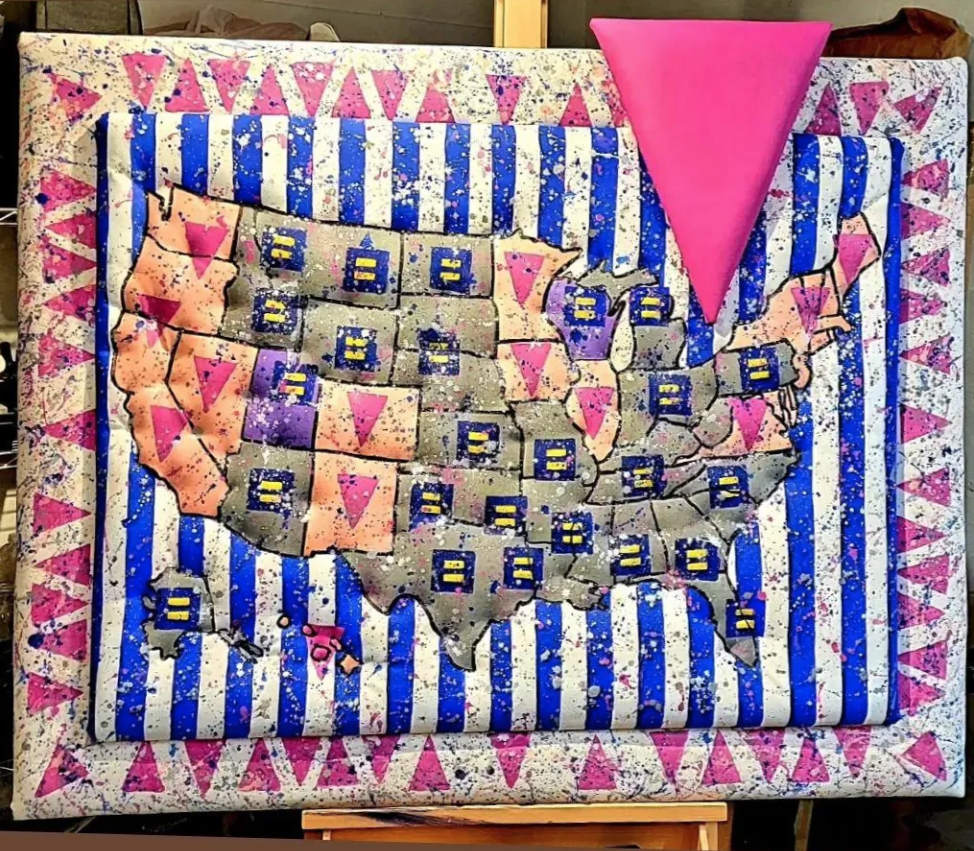
Raymond Vagg works in pure abstraction. He has never felt the desire to recreate what already exists in nature, and he paints for himself first, making work that engages him and that he hopes will open an experience for others. He never wants to force a response, leaving room for viewers to love a piece, hate it or feel nothing at all. We all see the world through the prism of our own life optics, and his hope is for the viewer to have a personal conversation with the work, one that reflects their own experience rather than his.